Posts

Sunshine in the Garden
Image
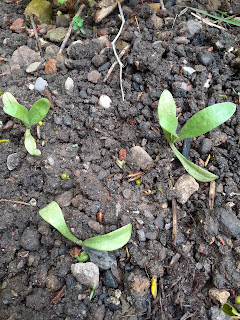
 Calendula flowers are also known as the Pot or English Marigold. They are annual plants and each year they produce vivid orange daisy flowers that look like tiny sunshines. I am very keen on this plant because it is both beautiful and useful. I plant seeds (which look like toenail clippings) every year, starting them off in the greenhouse in March and planting the seedlings out in May. The new seedlings then grow alongside the seeds dropped by last year’s crop that have lain dormant over winter. This year I am also trying out a couple of variations on the colour – a ‘Neon’ and a ‘Sunset Buff’. I don’t plant these out in any regimented pattern, but scatter them randomly through my fruit and vegetable plot and my wildlife area. As well as being attractive to pollinators because of their bright colour, they also attract pests such as aphids away from your crops so they are certainly helpful. They are also very amenable flowers and don’t need to be mollycoddled. They will grow just ab...

Vivid, Vital, Viola

Image
 There's a bit of a colour gap in the garden at the moment. The spring bulbs are over, and although the apple blossom is out and the forget-me-nots are thriving in a delicate drift, there is little to seize the eye and provide zest. The pale blues and whites are submerged by the thuggish greenery of May, as all and sundry thrust out their leaves and crawl across the soil. But there is one thing. Thank you, Violas. I sowed two packets of viola seeds last autumn - one I had purchased and the other came free with a magazine. I left them to their own devices in the greenhouse over winter, and then when the first signs of spring came I put the little plants into the hanging baskets on my shed, and into a couple of small patio pots. You have to plant them in something small unless you have a heck of a lot of them, otherwise they look wimpish. It was easy, no fuss, but now those little faces are making a fuss of the best kind. Their vivid yellow and purple faces are nodding away in their ...

Borage - The Star Flower

Image
Summer is on its way, and those of us who like to mark the season with a glass of Pimms might have come across a small blue flower floating about in there. Borage is the traditional garnish for this drink, although in recent times it has become buried under a mass of citrus fruits and cucumber. The last time I bought a Pimms and Lemonade in a pub I was hard-pressed to get to the drink! Borage is also known as the Starflower because of its shape, and as well as being a pretty and bee-friendly addition to the flower border it has long been used in the kitchen and the medicine cabinet. Starflower capsules have been marketed as an alternative to evening primrose oil - a supplement taken by many women to help control PMS symptoms. There may be a connection here with the anti-depressant properties attributed to it in the past. The 16th century herbalist John Gerard wrote: "Those of our time do use the flowers in salads to exhilarate and make the mind glad." I have had borage in my ...

Temporary Accommodation - A Novella by Sarah Miller Walters

Image
 Available as a printed book or Kindle download from Amazon, this story is set in an English village in the post war period. It's all about prefab houses and gardens, with a bit of theatrics thrown in. Here's an extract: With her diary marked midweek and Mrs Bidder likely to want to make a visit soon, Marigold rose on Monday morning feeling that she really must get on with making a start in the garden. She took her cup of tea out there, breathing in a mixture of melting frost and wood smoke. They were burning the hedges again to make way for the prefabs. It was a smell of outdoors and her father’s bonfires. It wrapped around her and made her tea taste good. The garden had now been sketched out in a notebook, which Marigold fetched from her overalls pocket. A map of square beds and narrow paths, a potager ending in an immovable bank of brambles. The ground would have to be dug over as a starting point, perhaps twice or three times. She had obtained an old spade from Mr Tinker an...

Watering the Wildlife

Image
  One of the most pleasant ways to spend your time in the spring and summer is garden wildlife watching.  It is mindful and relaxing - a great way to reduce stress levels without leaving the comfort of your own chair. Over the lockdown period, I have noticed just how important   water   is in attracting wildlife and providing scenes worth staring at.  Many of us have been feeding birds for years, and planting flowers to attract pollinators - but how much thought has been given to providing plenty of drinking and bathing   water ? I currently have six sources of  water  on my small back garden and each seems to be favoured by different creatures. Firstly, there is the pond. This is home to the frogs, whose spawn provides entertainment every spring and summer as it develops into tadpoles and froglets. To me, the arrival of frogspawn is a joyous occasion as then I know that winter really is on its way out. But the pond also has a shallow end which is...

Ravishing Rhubarb

Image
  Snowdrops are generally acknowledged to be the first sign of spring in the garden, but in my little plot the rhubarb always beats them to it. And while snowdrops are beautifully delicate and demure, rhubarb is brash, bright and bold. As early as the new year you can see livid pink knuckles poking up through the soil. By February, these have been topped by crinkly acid green leaves. I generally help mine along at this point by sticking an old metal fire bucket over the top - the darkness forces the rhubarb and rewards me a few weeks later with my first produce from the garden. I always like to have my first taste of rhubarb for the year in its raw form, dipped in sugar. This takes me back to my childhood - who wasn't given a stick of rhubarb and a bag of sugar when they were young? The tartness of the fruit is made up for in being allowed to eat some sugar like it was sherbet. I cook my rhubarb in two different ways. My "signature dish" as they say on television these da...

Hug a New Herb

Image
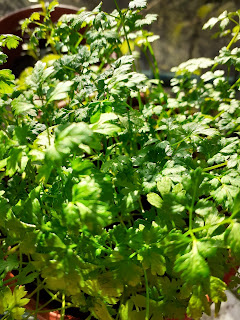
 I recently had a go at growing chervil, which is not something I previously knew much about, in fact I had barely heard of it before. But apparently it lasts well over winter so I picked up a few seeds and chucked them into a pot in the greenhouse in the autumn. I was not disappointed! Look at this lovely lush offering! The leaves are reminiscent of parsley, and like that herb they also belong to the carrot family and have a strong tap root. The flavour is not dissimilar, but it is milder, perhaps with a hint of aniseed. According to herb expert Alys Fowler, the benefits of chervil include an improved digestion and it also acts as a diuretic. In times past, it was also used in an eyewash for inflamed eyes.  You can grow it in a pot in the greenhouse as I have done, or sow the seeds direct into the garden. However, it is apparently much favoured by slugs, so you must be prepared to sacrifice many of the plants. It enjoys shade, which is just what  I have in abundance in m...